
Dryer vent cleaning, from the back of the dryer to the outside wall
You clean the lint screen every load, but some lint always gets past it and settles in the duct behind the machine. Over time that duct narrows, loads take longer to dry and the dryer runs hotter. We clear the whole run, inside and out, and check that air moves freely at the hood when we are done.
What the service is
Dryer vent cleaning clears the duct that carries hot, damp air from the dryer to the outside of the house. That is the part behind the wall or across the basement ceiling that you cannot reach yourself. A clogged vent makes every load slower and puts the dryer at risk of overheating, which is why it is worth doing before the signs get worse.
Signs the vent needs cleaning
A dryer that needs two cycles for one load is the most common sign. The machine itself is usually fine. The air simply has nowhere to go.
- Loads that take longer than they used to
- A dryer top or laundry room that feels hot or humid
- A burning smell while the dryer runs
The lint screen catches most of it. The duct behind the dryer collects the rest.
Both ends of the run, and the hood
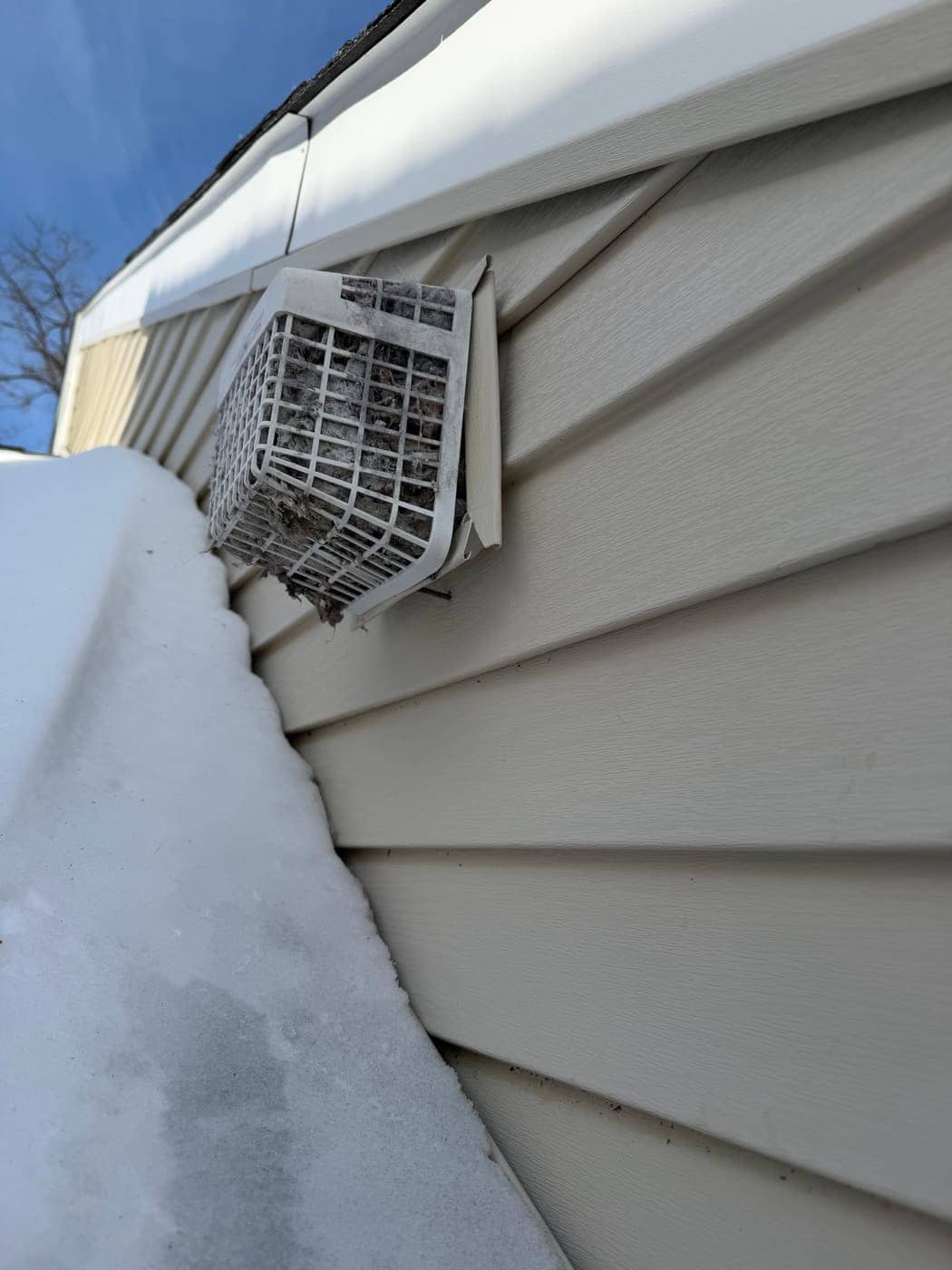
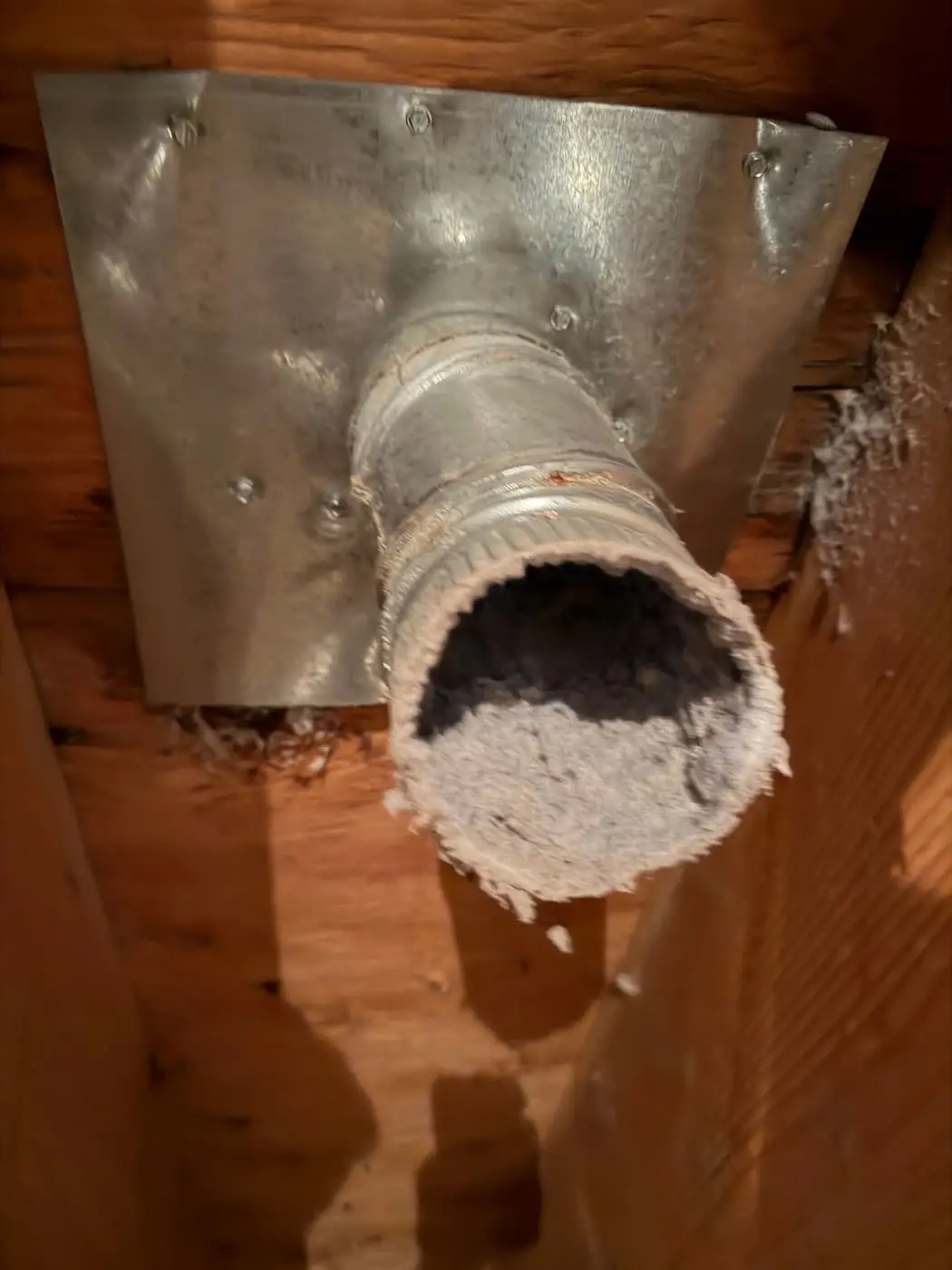
Lint collects wherever the air slows down, at every bend and joint and along any section of foil duct crushed behind the machine. We clear the run from the dryer end and from the hood end so nothing is left packed in the middle. The hood on the outside wall matters as much as the duct. When its flap sticks or the housing fills with lint, or a bird builds in it, the whole run backs up.
Long runs and the code
The residential code that applies in New Jersey limits a standard dryer exhaust duct to 35 feet, minus an allowance for every bend, unless the dryer maker’s instructions allow more. Long runs across a basement or up through a multi-family building fill up faster and deserve a closer look.
- Basement laundries often mean a long run to the outside wall
- Every elbow shortens the length the code allows
- Crushed foil behind the machine is replaced with a proper connector
When the duct is damaged
Sometimes cleaning is not the fix. A duct crushed flat behind the dryer, a joint that came apart inside a ceiling or a run that ends in a crawl space instead of outdoors needs repair. We show you what we found and quote the repair separately.
Recent reviews from our Google listing
A selection of our 5-star reviews on Google.
Flexible driving rods swept the whole height of the chimney from the ground up, keeping high altitude roof dangers down while getting a pristine flue barrel.
After four seasons of burning cordwood in an EPA-certified catalytic insert, relief was complete when the ceramic honeycomb combustor was gently cleaned out, without a single fin broken.
To guarantee that the cleaned flue maintained a consistent laminar flow throughout, devoid of eddy currents and reverse air roll, pressure testing was undertaken.
Dryer vent questions we hear
How often should a dryer vent be cleaned?
It depends on how long the run is and how much laundry the household does. Longer drying times are the best signal. Many homes find once a year about right.
Can you do it on the same visit as the chimney?
Yes. Booking both together saves you a second appointment.
Our laundry is in the basement and the duct is long. Is that a problem?
Not necessarily, but long runs with several bends fill faster. We check the length and the bends, and clear the whole run.
Do you clean dryer vents in apartment buildings?
Yes, with the building owner’s or manager’s approval, since the duct usually leaves your unit.