
Getting an older North Jersey fireplace ready for winter
Everybody in the county calls on the first genuinely cold weekend. Everything worth doing to a fireplace can be done in September, at a time you chose, by somebody who is not booked out.
The short answer
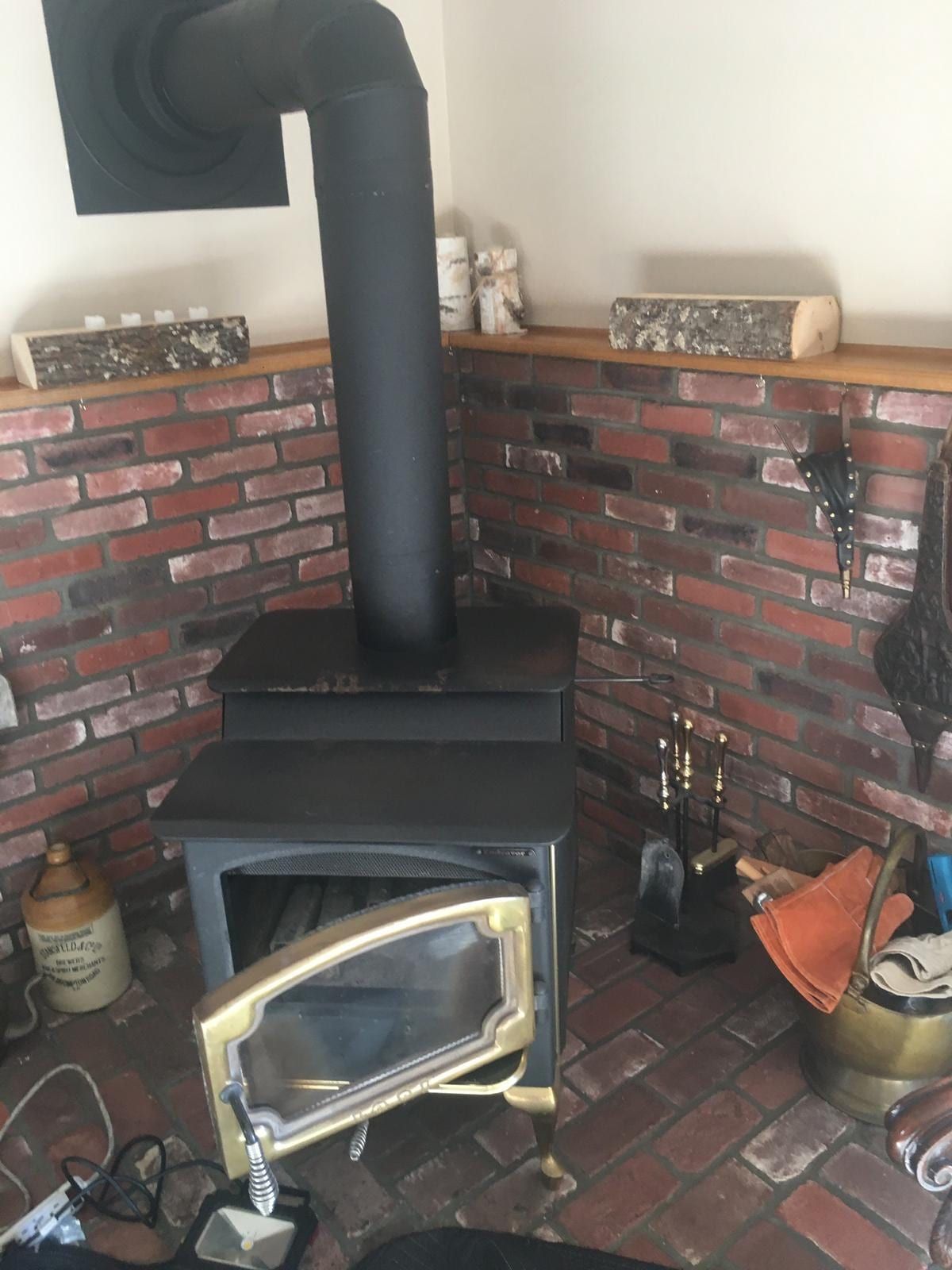
Before the first fire of the season, five things are worth checking on an older fireplace: that the damper moves and seats, that there is no debris or nesting material on the smoke shelf, that the firebox brick and mortar are sound, that the cap is still on the chimney and clear, and that the flue has been inspected since the last time it was used. Four things mean stop rather than schedule — smoke pushing back into the room, a sharp acrid smell from an unlit fireplace, a roaring sound or falling debris during a fire, and visible cracks in the firebox or daylight where there should not be any. The right time to do all of this is September, not the first cold weekend in November.
Start with the damper, because it is the cheapest failure
Open and close it. It should move without a fight and seat properly when closed. On an older fireplace the plate is frequently rusted into its frame, or the handle has broken off and been lost by a previous owner, and both are usually freeable rather than replaceable. This matters twice over: a damper that will not open makes the fireplace unusable, and a damper that does not seal is a hole in your roof from November to March, quietly costing you heat. It is also the one check on this list you can do yourself in thirty seconds with a torch.
Look at the smoke shelf and the firebox
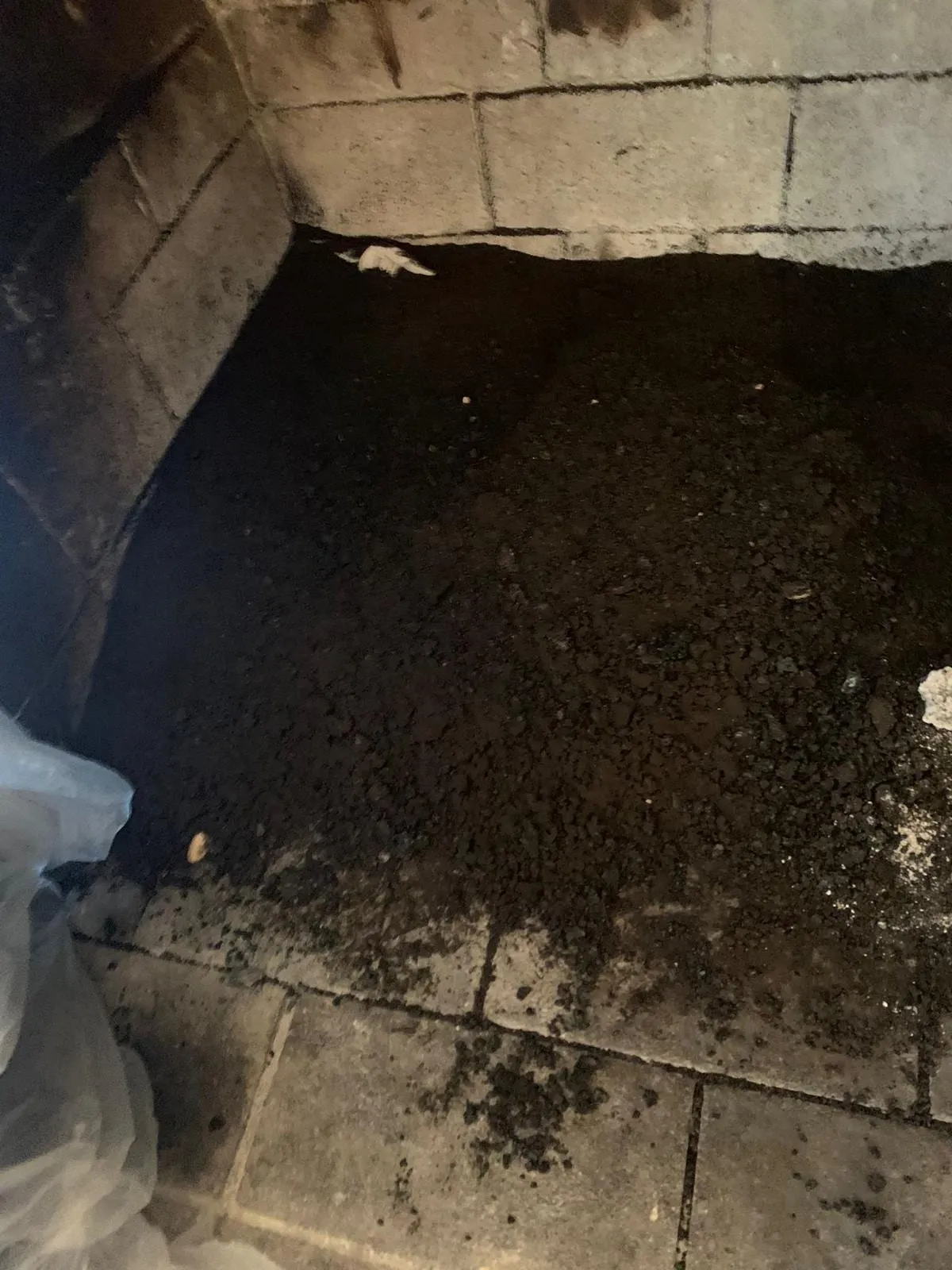
With the damper open, look up and behind it. The smoke shelf is where debris, nesting material and the heaviest deposit collect, and it is the part a fast sweep leaves alone. Anything that has fallen down the flue over the summer will be sitting there. Then look at the firebox itself: the brick and the mortar joints should be sound, with no cracks running through them and no gaps you can see light through. Cracked firebox brick is not cosmetic — the firebox is what stands between the fire and the structure of your house.
- Debris and nesting material collect on the smoke shelf, not in the straight flue
- Cracked firebox brick or visible daylight is structural, not cosmetic
- Anything that fell down the flue over the summer will be sitting behind the damper
Check the cap is still there, from the ground
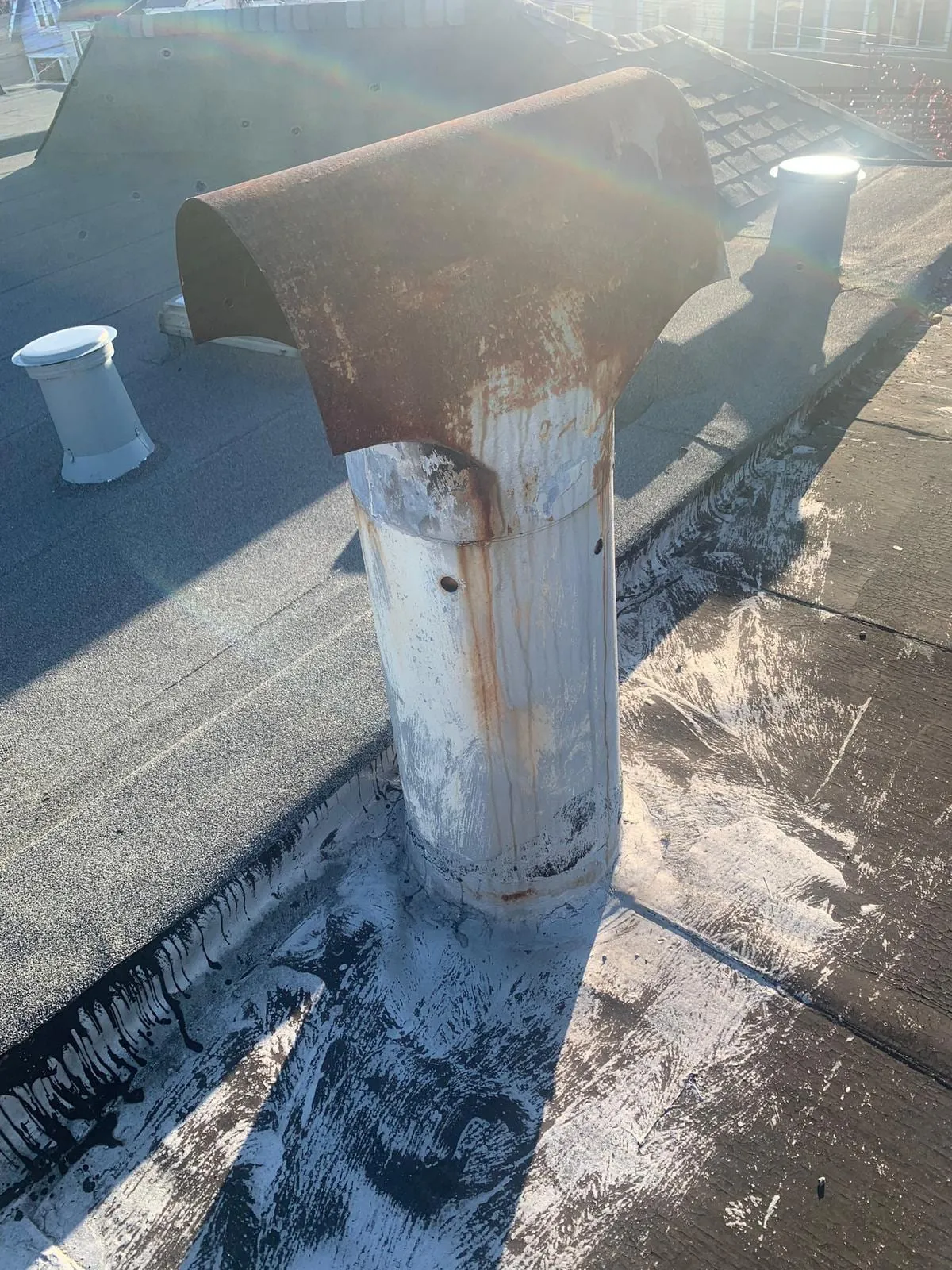
You will not be able to judge its condition from a driveway, but you can establish whether it is still on the chimney, and after a windy autumn that is worth doing. A missing cap means rain and snow have been falling straight down the flue, which does more damage over one wet season than a year of burning does. It also means anything that wanted to nest in there has had an open invitation. If it looks like it has gone, or is sitting at an angle, that is a call to make before the first fire rather than after it.
The four things that mean stop, not schedule
Smoke pushing back into the room once the fire is going — that is draw failing, and it can mean blockage, an unparged smoke chamber or negative pressure in the house. A sharp acrid smell from the fireplace when it is not lit, especially in humid weather — that is creosote plus moisture and it usually means water is getting in. A roaring sound from the chimney during a fire, or debris landing in the firebox — both can mean a chimney fire is happening or has already happened. And visible cracks in the firebox, or daylight where there should not be any. Any of those means do not light it again until somebody has looked.
- Smoke coming back into the room once the fire is established
- A sharp smell from an unlit fireplace, worse in humid weather
- Roaring from the chimney or debris falling into the firebox during a fire
- Visible cracks in the firebox brick, or daylight through a joint
Burn dry wood, and stop banking the fire overnight
Two habits do more for a chimney than anything else on this list. Well-seasoned wood spends its energy making heat rather than boiling off water, which keeps the smoke hot enough to leave the flue before it deposits anything. And damping a fire down to keep it in overnight is, by design, a cool smouldering fire — the single most effective way to line a flue with creosote quickly. If you do one thing differently this winter, make it that one: burn hot and let it go out, rather than burning slow and keeping it in.
Related questions
How do I know if my wood is seasoned?
Split a piece and look at the face: seasoned wood is gray-brown rather than pale, has visible cracks radiating from the center, and two pieces knocked together sound sharp rather than dull. Wood cut this year is not seasoned, whatever it was sold as.
Should I do all this before or after having it swept?
Do the damper and firebox check yourself now, and have the sweep and inspection done in September. If your own check turns up anything on the stop list, skip straight to the phone call.
Is it too late if it is already November?
No, but expect less choice of appointment. The work is identical; the difference is that in September you pick the day and in November you take what is left.
Want somebody to actually look at it?
Everything above is how this kind of work usually goes. What it is not is an assessment of your chimney, because nobody has seen your chimney.
The service this is about
Chimney sweeping
Creosote does not announce itself. It builds in the dark, a little every fire, and the first sign most people get is smoke coming back into the room on the coldest night of the year.
Read moreFireplace and stove service
A chimney can be spotless and the fireplace still refuse to work. When that happens, the problem is almost always at the bottom.
Read more