
The signs your dryer vent is blocked, and why it matters
You empty the lint trap every load. The trap is not the problem. The problem is the run behind it, which is not built to be opened by the person using the machine.
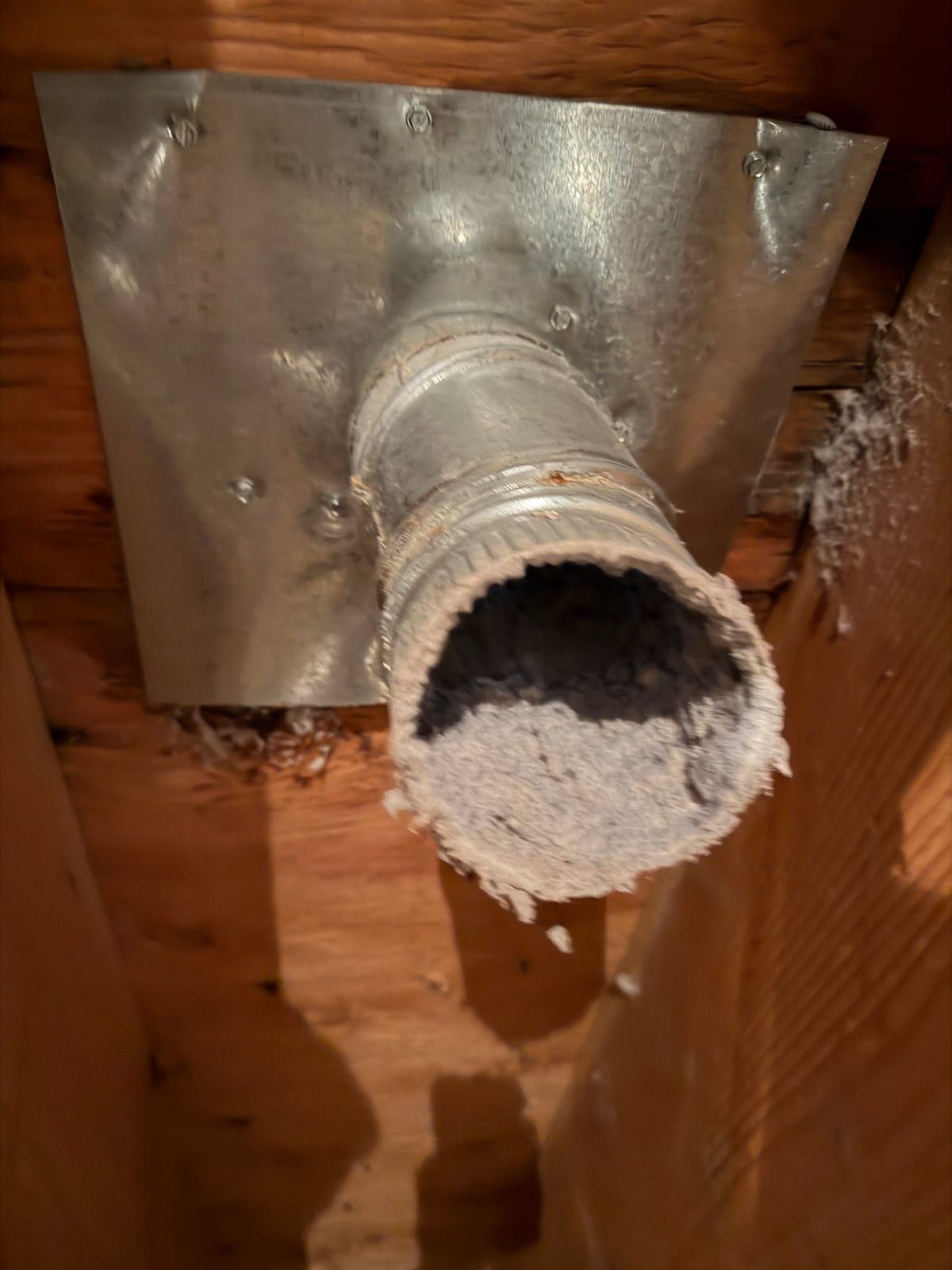
The short answer
A blocked dryer vent announces itself in ordinary ways long before it announces itself dramatically: clothes still damp at the end of a full cycle, a load that needs two cycles where it used to need one, a laundry room that gets noticeably hot, a machine hot to the touch, a burning smell, or no air coming out of the exterior hood while the dryer is running. It matters because clothes dryers cause roughly 2,900 residential fires a year in the United States, and the US Fire Administration names failure to clean as the leading cause. The lint trap catches most of what comes off a load but not all of it; what escapes settles in the duct, and the duct is the part you cannot see.
The six signs, in the order people notice them
Almost nobody calls about a dryer vent because they are worried about fire. They call because the machine has stopped working properly, and the sequence is consistent. First, clothes come out slightly damp and nobody thinks much of it. Then a full load needs a second cycle. Then the laundry room is noticeably warm when the dryer runs, and the machine itself is hot to the touch. Somewhere around there the energy bill has crept up, though almost nobody attributes that to the dryer. A burning smell and no airflow at the exterior hood are the late signs, and by then the restriction has been building for years.
- Clothes still damp at the end of a full cycle
- Two cycles needed where one used to be enough
- The laundry room noticeably hot, or the machine hot to the touch
- A burning smell while the dryer runs
- No air coming out of the exterior hood with the dryer running
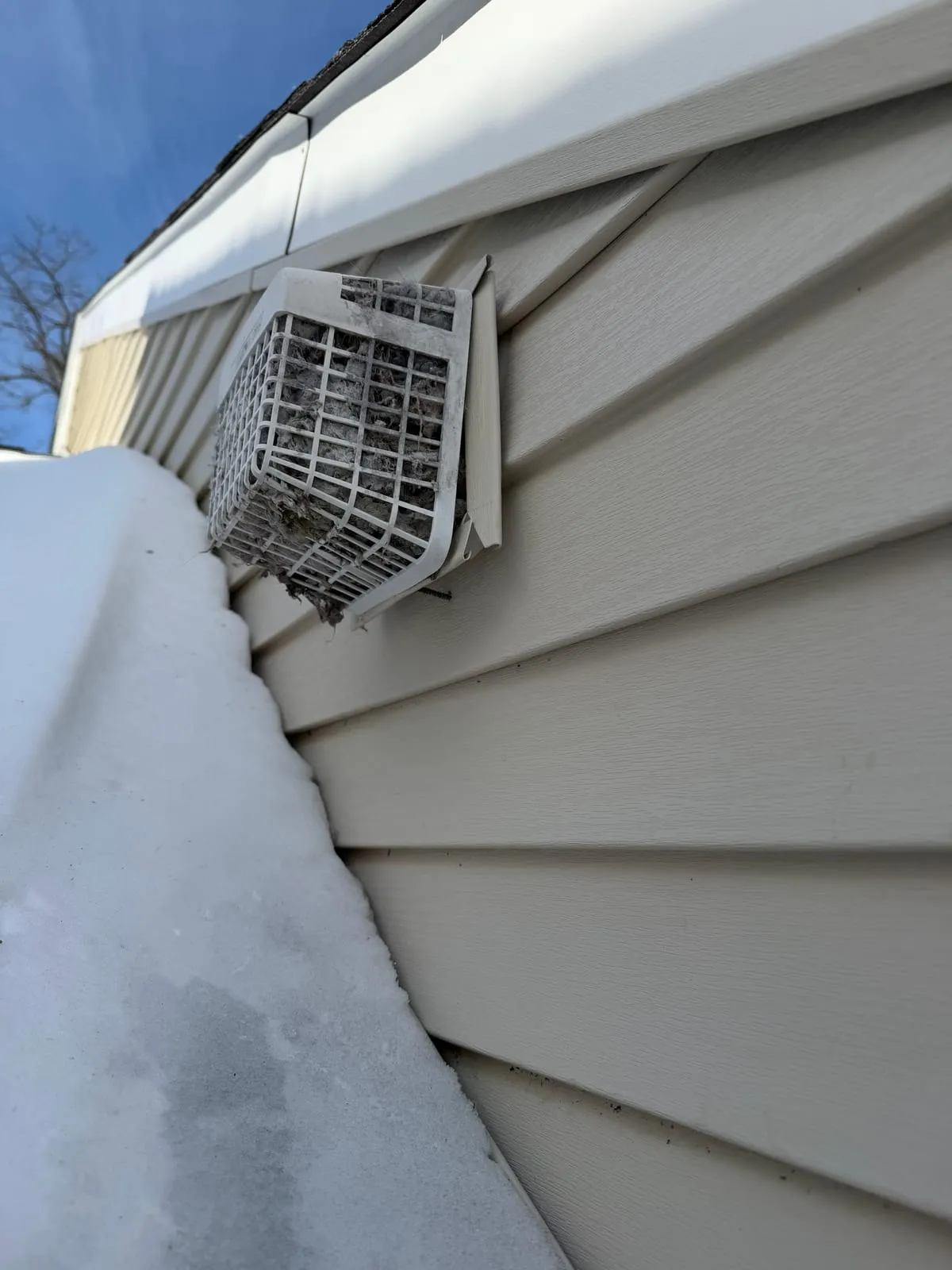
The thirty-second test anybody can do
Put a load on, go outside, and put your hand near the exterior hood. You should feel a strong flow of warm air. If you feel a weak trickle, or nothing, the run is restricted somewhere between the machine and the wall and no amount of emptying the trap will change that. While you are there, look at whether the flap is opening properly: a hinge that has corroded, a housing packed with lint, or a bird's nest in the hood will all back the run up from the far end, which is why cleaning from the machine end alone sometimes fixes nothing at all.
Why long runs fill faster
Lint settles wherever the air slows down, and air slows down at every elbow. A short straight run to an outside wall may go years without trouble. A run that crosses a basement ceiling with four or five elbows before it reaches one will collect at every single turn, and in much New Jersey housing that is exactly the arrangement, because the laundry sits in the middle of the basement rather than against an exterior wall. Flexible foil accordion hose makes it worse: it is acceptable as a short transition between the machine and the wall and it is a trap as a whole run, because its ridged interior catches everything that passes.
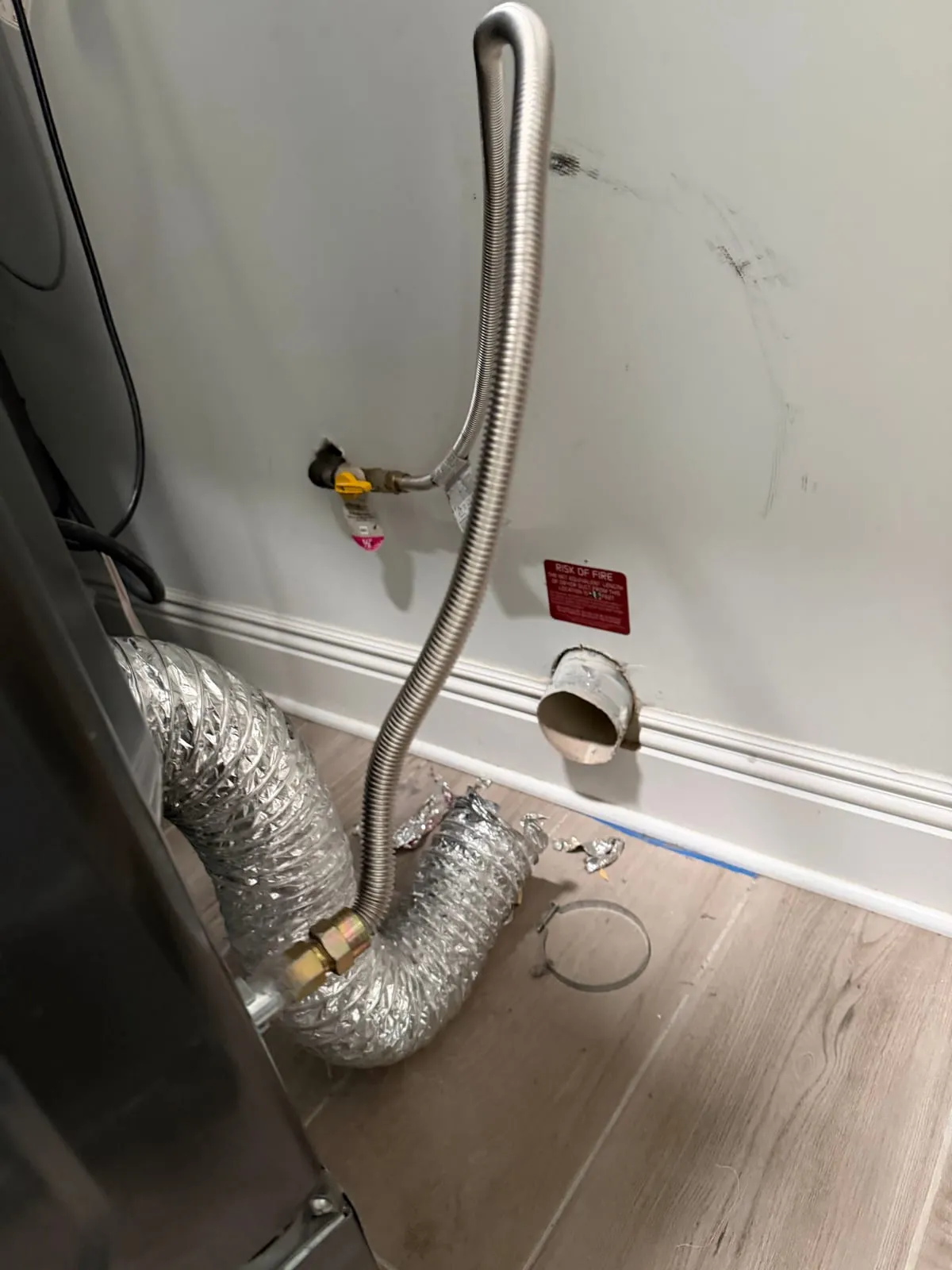
When the duct is the problem rather than the lint
Sometimes a duct is not dirty, it is damaged, and cleaning it changes nothing. A flexible section crushed flat behind the machine, because somebody pushed the dryer back to the wall, does not recover its shape or its cross-section. A joint that has come apart inside a ceiling void puts warm wet lint-laden air into the building fabric with no sign in the laundry room. And occasionally a run terminates in a crawl space, an attic or a soffit rather than through an exterior wall — which is an installation defect and a moisture problem as much as a lint one. All three need replacing, not cleaning.
- A flexible hose crushed flat behind the appliance
- A joint that has separated inside a ceiling or crawl space
- A run terminating in a crawl space, attic or soffit instead of outside
How often, and what to expect from a visit
Once a year is the usual interval for a household running four or five loads a week. A long run with several elbows, a large family, or a machine already taking two cycles are all reasons to do it sooner. A proper visit clears the whole run from both ends rather than the first arm's length behind the machine, brushes through the elbows where a vacuum alone will not reach, checks and clears the exterior hood, and ends with somebody showing you what came out. That last part is not showmanship: you cannot see inside your own duct, so the lint is the only evidence there is that the job was done.
Related questions
Can I do it myself with a kit from the hardware store?
For a short, straight run to an exterior wall, often yes. For a long run with elbows, or one that goes up through a ceiling, a consumer kit tends to push the blockage further in rather than pull it out — and it cannot check the hood at the far end, which is where a good share of the problem lives.
Does a new dryer make a difference?
Not to the duct. A new machine may be more efficient, but if the run behind it is restricted the new one will also run long and hot. Replacing the dryer because it is slow, without checking the vent, is a common and expensive mistake.
What about apartments and condos?
Same work, different permission. A shared or vertical stack run in a multi-unit building is not entirely inside your apartment, so the managing agent or association usually has to agree before it can be cleared.
Want somebody to actually look at it?
Everything above is how this kind of work usually goes. What it is not is an assessment of your chimney, because nobody has seen your chimney.
The service this is about
Dryer vent cleaning
You empty the lint trap every load. The trap is not the problem. The problem is the twenty-five feet of duct behind it, which is not built to be opened by the person using the machine.
Read moreAir duct repair and replacement
Some ducts are dirty. Some are broken. And some were never connected to the outside of the building at all, which is the one nobody sees coming.
Read more